
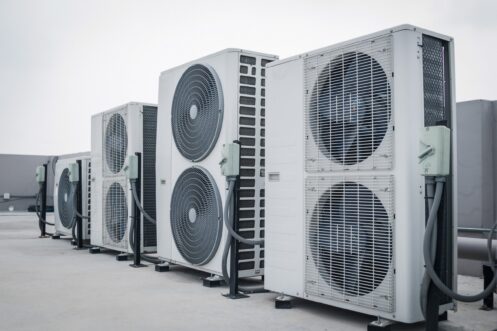
In many commercial systems, overheating problems during peak cooling season start developing in spring. That’s when demand begins to increase but not so much that minor underlying issues are as noticeable. Watch out for any signs of degraded performance and follow the tips below to keep your commercial property cool and avoid AC repairs throughout the summer.
Why Commercial Systems Overheat During Peak Season
As outdoor temperatures rise, commercial cooling systems run longer and under heavier load. If airflow is restricted or components are not operating at full capacity, heat builds up inside the system faster than it can be removed.
This often leads to reduced cooling output, higher energy use, and in some cases, system shutdowns during the hottest part of the day.
Inspect and Replace Air Filters Early
Airflow is one of the most important factors in preventing overheating. Dirty or restrictive filters limit how much air moves across the system, which reduces its ability to remove heat.
In commercial settings, filters tend to load faster due to higher occupancy and larger volumes of air moving through the system. Replacing filters in spring helps maintain proper airflow before peak demand hits.
Check Coils for Performance, Not Just Cleanliness
Evaporator and condenser coils play a direct role in heat transfer. If coils are coated with debris or not operating efficiently, the system cannot release heat effectively.
Even a thin layer of buildup on condenser coils can trap heat, causing the system to run hotter than intended. Spring maintenance should include evaluating coil condition and confirming they can support peak cooling loads.
Verify Proper Airflow Across the System
Beyond filters and coils, airflow issues can come from blocked returns, closed dampers, or duct restrictions. These problems reduce the system’s ability to move air consistently, which contributes to overheating under load.
A full airflow check helps identify where restrictions exist so adjustments can be made before summer HVAC demand increases.
Test System Controls and Load Response
Commercial systems rely on controls to manage temperature, cycling, and load distribution. If sensors or controls are not calibrated correctly, the system may run longer than necessary or fail to respond to rising temperatures.
Testing system response in spring allows time to correct these issues before they impact performance during peak conditions. Preventing commercial HVAC overheating starts with addressing airflow, coil performance, and system controls before demand peaks.
At Anderson Heating & Cooling in Oregon City, OR, we provide commercial system inspections and maintenance to keep your building running efficiently. Contact us today to schedule spring service and avoid costly downtime.